

Description
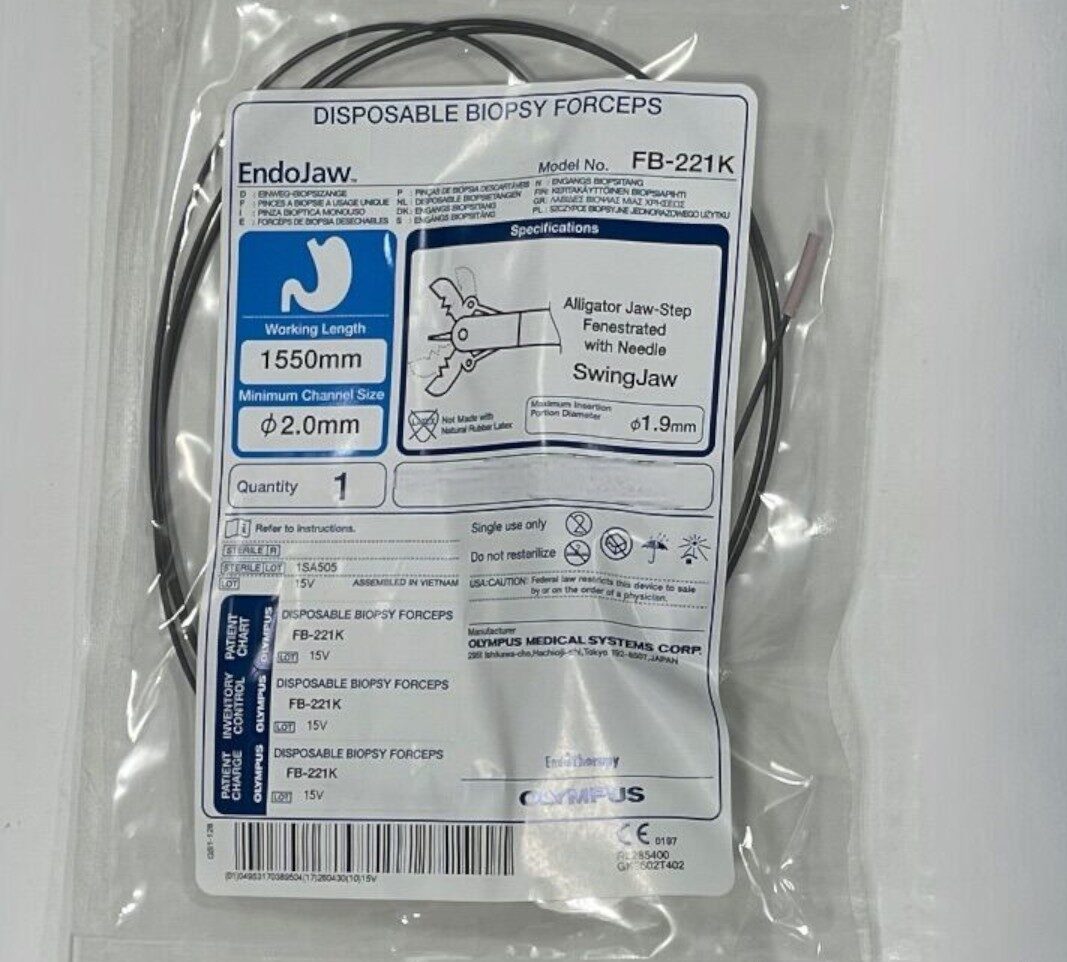
A biopsy forceps with a 1550 mm length and a 2 mm diameter is a specialized medical instrument
designed for use in endoscopic procedures. Here’s a breakdown of its features and function:
Function and Application
This type of forceps is used to obtain tissue samples, known as biopsies, from a patient’s body for diagnostic purposes.
Its long, flexible shaft (1550 mm, or about 1.55 meters)
allows it to be inserted through the working channel of an endoscope,
which is a long, flexible tube with a camera at the end.
The narrow 2 mm diameter of the forceps is specifically sized to fit through the instrument channel of an endoscope used for procedures
like upper GI endoscopy (gastroscopy) or bronchoscopy.
Common uses for this specific type of biopsy forceps include:
- Gastroenterology: Taking tissue samples from the esophagus, stomach, or small intestine to diagnose conditions such as ulcers, celiac disease, or cancer.
- Pulmonology: Obtaining biopsies from the respiratory tract, including the trachea and bronchi, to diagnose lung diseases or tumors.
Key Features and Variations
- Length: The 1550 mm length is a common “working length” for endoscopes, ensuring that the forceps can reach the target area within the patient’s body.
- Diameter: The 2.0 mm diameter is compatible with endoscopes that have a working channel of at least 2.0 mm.
- Jaw Design: The forceps’ jaws are at the distal end of the instrument and come in various designs, including:
- Oval cups: The most common design for general tissue sampling.
- Fenestrated cups: These have a hole in the jaw to allow for a larger tissue sample and prevent the biopsy from slipping.
- With or without a needle: A small needle or spike at the center of the jaw helps anchor the forceps to the tissue,
especially in hard-to-reach or slippery areas, for a more secure and accurate biopsy. - Alligator or rat tooth jaws: These designs offer a stronger grip and are particularly useful for taking biopsies from fibrous or difficult-to-grasp tissue.
- Disposable: The majority of these biopsy forceps are single-use and disposable.
This is a crucial safety measure that prevents cross-contamination between patients and eliminates the need for complex sterilization procedures. - Handle and Operation: The forceps have an ergonomic handle at the proximal end that the surgeon uses to open and close the jaws.
Some models may be rotatable, which allows the surgeon to precisely position the jaws for an optimal biopsy angle.The combination of the specific length and diameter, along with the various jaw configurations,allows healthcare professionals to select the ideal instrument for their specific diagnostic needs and procedural requirements.

Reviews
There are no reviews yet.